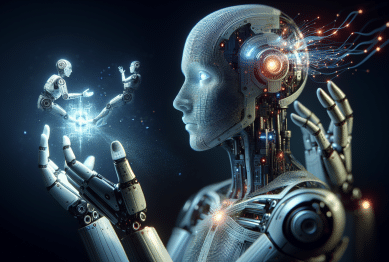


Curious about why artificial intelligence (AI) seems to reshape our world so quickly? This guide explores how AI evolves, why it often outpaces expectations, and the powerful forces that drive its progress. Learn what impacts breakthroughs and how it shapes the future of technology and science.

What Drives Artificial Intelligence Progress
Artificial intelligence does not advance in isolation. Robust progress relies on powerful computing, unprecedented amounts of digital data, and collaboration across institutions. Machine learning is often cited as the reason for rapid progress, but the true driving force is the fusion of smarter algorithms, vast information, and high-performance hardware. As data from apps, sensors, and online services multiplies, AI models improve their ability to spot patterns faster than ever before. This feedback loop—more data, better models, better outcomes, and then more data—constantly accelerates learning.
One catalyst behind headline-grabbing artificial intelligence breakthroughs is deep learning. Deep neural networks mimic how brains process information and allow systems to learn directly from experience. This approach helped AI reach new heights in language, image recognition, and complex problem-solving. Instead of programming every rule, researchers let AI discover patterns independently, training it on millions of examples. The surprising creative abilities that often emerge capture headlines—and sometimes catch even experts off guard.
The open sharing of code, research, and best practices is another factor that speeds innovation. Scientists and businesses frequently publish their latest work, inviting peers worldwide to build on it or point out flaws. Open source projects let anyone experiment with cutting-edge tools, democratizing access. This culture of transparency turns isolated discoveries into global movements, fueling the AI advancements many encounter in daily life. Innovations spread rapidly across sectors, providing the foundation for fresh surprises.
Why AI Evolves Faster Than Most Technologies
Unlike traditional technologies that mature slowly, artificial intelligence compounds its progress as it learns. A single breakthrough in natural language processing or image analysis can be shared instantly across the world, meaning that discoveries amplify benefits for many researchers and companies. The global research community often improves existing methods, ensuring that new tools are not limited to just one organization or country.
Cloud computing also enables rapid progress. Instead of waiting for new hardware, AI developers can rent remote servers and scale their work up or down. This flexibility removes barriers, lowering costs and let teams prototype ideas quickly. A successful algorithm developed for autonomous vehicles, for example, may be adapted for healthcare diagnostics or financial modeling quite rapidly.
Online platforms for sharing data and code further boost the pace of change. Collaborators quickly build off each other’s progress using platforms specifically designed for reproducible science. These methods create a rich ecosystem that rewards creative thinking and innovation. The result? Many underestimate just how quickly artificial intelligence adapts and transforms across multiple industries.
The Role of Algorithms and Data in AI Surprises
Algorithms write the rules for how artificial intelligence learns from our digital world. As these algorithms become more complex, their ability to identify hidden links and subtle correlations grows. Modern models, such as neural networks with billions of parameters, crunch data in depth that humans cannot match. This complexity often leads to behaviors that data scientists didn’t anticipate. For example, image-classifying models might learn to recognize watermarked images unless safeguards are put in place, revealing both the power and limits of this technology.
Big data is the fuel for advanced algorithms. Continuous feeds from social media, smartphones, cameras, and IoT devices deliver a vast supply of material for machine learning to digest. This deluge of information, when properly organized and labelled, allows AI to master everything from languages to medical images. However, the unpredictability comes from just how quickly models improve when exposed to new, relevant data—the more varied the inputs, the more creative and unexpected the outputs may be.
Even expert developers are sometimes surprised by what models figure out. In some cases, neural networks solve tasks in ways that are difficult to interpret, spawning a new focus on explainable AI. This subfield seeks to uncover why models make certain decisions, improving transparency and trust. As algorithms and data keep evolving, the quest to understand these sophisticated systems continues at the frontiers of technology and science.
Real-World AI Applications that Might Surprise You
Artificial intelligence breakthroughs aren’t just theoretical—they’re visible in daily life. Virtual assistants, language translation tools, and chatbots are now familiar features, yet their accuracy and fluency have rapidly improved in a few short years. Many forget that, behind the scenes, these systems continually retrain themselves on massive datasets collected worldwide. Their abilities to respond to natural conversation and understand context emerge from constant refinement, not fixed programming.
Healthcare is another field full of AI advances. Algorithms help identify patterns in radiology images, advise on treatment plans, and even predict patient outcomes. Sometimes these models spot indicators that humans overlook, driving earlier and more accurate diagnoses. At the same time, careful oversight is essential, since AI is still refining its judgment and often partners with human experts for final decisions.
In transportation, AI powers navigation routes, optimizes traffic flow, and even drives cars autonomously under certain conditions. These systems combine data from weather, user habits, and real-time events to make instant recommendations. The underlying models that make recommendations or even decisions learn continuously from every journey, drawing surprise from their ability to adapt to conditions or trends almost in real-time.
How AI Impacts Jobs and Everyday Life
AI’s rapid evolution brings both optimism and uncertainty to the workplace. Many tasks once considered irreplaceable—such as document review, customer support, or even composing music—can now be assisted or completed by AI. This creates opportunities for new roles focused on guiding, interpreting, or supervising advanced technologies. Workers across sectors find their day-to-day experience transformed by automation and personalized recommendations, sometimes freeing them from routine but also redefining roles.
Personalized experiences are another outcome. From streaming services that anticipate user preferences to shopping apps with tailored product suggestions, artificial intelligence learns and adapts in the background. Algorithms track habits and preferences, aiming to enhance satisfaction and save time. The tradeoff? Increased reliance on AI for decisions big and small, raising questions about how humans can remain in control as systems grow more autonomous.
Job displacement is a concern often raised when discussing automation and intelligent systems. However, history shows that technology constantly reshapes the labor market, creating demand for new skills and specializations. Organizations and governments are investing in artificial intelligence education to help people adapt and thrive in this rapidly shifting environment. Continuous learning and curiosity about technology may be the best preparation for surprises that lie ahead.
Ethical Considerations and Societal Challenges
The power and unpredictability of AI bring both promise and responsibility. Concerns about algorithmic bias, privacy, and misuse require careful governance. Ethical guidelines are evolving to ensure fairness, accountability, and transparency in automated systems. Companies and researchers now include ethicists in project teams, modeling how technical and societal perspectives can shape responsible artificial intelligence innovation.
Privacy remains a top concern. As algorithms analyze personal patterns and digital footprints, strong safeguards are needed to protect sensitive data. Legal frameworks and global cooperation are essential, since advances in AI often cross borders. Ongoing debates continue about how to safeguard digital rights while encouraging scientific progress and economic growth.
Societal challenges include addressing gaps in access and opportunity. Not all communities have equal ability to leverage artificial intelligence for prosperity and innovation. Initiatives by universities, nonprofit organizations, and industry help bridge these divides by making educational resources and AI tools more widely available. Transparent policies and inclusive dialogue are vital to ensure that AI progress lifts many, not just a few.
References
1. National Institute of Standards and Technology. (n.d.). Artificial Intelligence Risk Management Framework. Retrieved from https://www.nist.gov/itl/ai-risk-management-framework
2. Stanford University. (n.d.). Artificial Intelligence Index Report. Retrieved from https://aiindex.stanford.edu/report/
3. European Commission. (n.d.). Ethics guidelines for trustworthy AI. Retrieved from https://digital-strategy.ec.europa.eu/en/library/ethics-guidelines-trustworthy-ai
4. MIT Sloan School of Management. (n.d.). How AI is changing knowledge work. Retrieved from https://mitsloan.mit.edu/ideas-made-to-matter/how-artificial-intelligence-changing-knowledge-work
5. World Economic Forum. (n.d.). The Future of Jobs Report. Retrieved from https://www.weforum.org/reports/the-future-of-jobs-report-2023/
6. Harvard University. (n.d.). Using AI responsibly. Retrieved from https://ai.hms.harvard.edu/research/using-artificial-intelligence-responsibly




 Unlocking Passive Income Streams for Everyday Investors