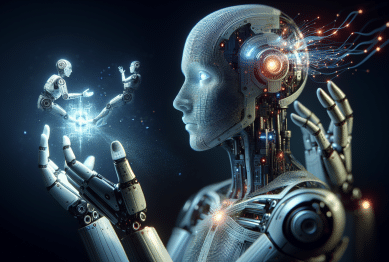


Discover how artificial intelligence reshapes daily productivity, from streamlining routine tasks to unlocking deeper insights for both personal and professional growth. This guide explores real examples, practical tips, and important considerations that help integrate AI into your workflow effectively.

Understanding Artificial Intelligence in Everyday Life
Artificial intelligence is rapidly becoming a silent partner in daily routines, impacting how people manage information, time, and even interactions. Whether automating reminders or sorting emails, AI-powered assistants now handle tasks that once required precious mental energy. In homes and offices, AI helps to manage calendars, transcribes meeting notes, and prioritizes workflows. This integration means less busywork and more meaningful focus on creative thinking or strategic planning. AI’s presence might seem invisible, but its influence on personal and workplace efficiency is substantial, transforming the landscape of what can be achieved within a limited timeframe.
One of the most widely used forms of AI is natural language processing. This technology underpins many digital voice assistants and chatbots, helping individuals quickly retrieve information, set appointments, or even answer customer inquiries. As these systems learn patterns and preferences, they become even more adept at anticipating needs and delivering value without manual input. For professionals, this means smoother communication, faster response times, and, importantly, fewer repetitive tasks. Ultimately, these improvements shape a smarter, less cluttered day for many users, both at home and in the workplace.
Integrating artificial intelligence into routine activities doesn’t require technical expertise. Modern devices and apps often include AI features by default—think smart thermostats adjusting temperature or email platforms prioritizing urgent correspondence. These advancements reduce decision fatigue and enable users to focus energy where it really matters. Like having an ever-watchful co-pilot, AI allows you to do more with less stress, all while continuously adapting to unique habits and needs.
Boosting Workplace Productivity With AI Tools
Many workplaces now harness artificial intelligence to streamline project management, automate accounting processes, and analyze large volumes of data for actionable insights. By automating repetitive, rule-based tasks, AI allows employees to direct their expertise toward high-value creative work or strategic thinking. From AI-supported scheduling that recommends optimal meeting times to intelligent document drafting, these tools are fundamentally changing how teams collaborate and solve problems. Employees often notice a reduction in errors, less time spent on manual entry, and more opportunities for meaningful contribution to projects.
Business leaders see tangible benefits as well. Data-driven decisions become easier with machine learning algorithms that mine trends and surface patterns otherwise missed by the human eye. As organizations adopt AI-powered analytics, resources can be allocated more efficiently, and market opportunities can be identified earlier. For instance, predicting customer behaviors allows marketing teams to customize campaigns and customer support to anticipate needs, leading to better engagement and retention. Such efficiencies also translate into cost-savings and, over time, a sustainable competitive edge in the market.
The challenge lies in balancing automation with human expertise. While AI accelerates routine processes, it’s essential to ensure employees remain empowered to innovate and adapt. A thoughtful approach—where AI augments, rather than replaces, human skills—fosters a culture of continuous improvement. Training programs can help teams feel comfortable using AI tools, ensuring that advancements in technology translate into real, daily value without overwhelming the workforce.
Unlocking Personal Efficiency With AI Assistants
AI-powered digital assistants play a significant role in helping individuals get organized and maximize personal efficiency. These assistants, often available through smartphones or smart speakers, can schedule meetings, send reminders for important tasks, and even control home devices on command. As these AI assistants integrate with more apps, they create a seamless ecosystem that supports both work and leisure by ensuring essential details never slip through the cracks. The time saved by delegating administrative chores can instead be devoted to pursuing hobbies or spending time with loved ones.
AI doesn’t just help with to-do lists. It supports wellness, too. Advanced health tracking apps use machine learning to suggest personalized exercise routines, monitor sleep cycles, and recommend nutrition plans based on individualized patterns. The same principle applies to apps that monitor productivity, suggesting breaks or focus periods when user attention starts to wane. By adapting to personal rhythms, AI makes it easier to build healthy habits and achieve more without sacrificing well-being.
Choosing the right AI assistant involves considering compatibility with existing workflows and devices. Voice recognition accuracy, data privacy policies, and the ability to learn user preferences are all factors that influence satisfaction. Exploring different assistant options helps individuals find a solution that fits seamlessly into their lifestyle, making the most of technological advances for daily benefit.
AI in Data Analytics and Decision-Making
Data analytics, empowered by artificial intelligence, is revolutionizing how organizations make decisions. By automating data collection and processing, AI algorithms can identify insights and trends in vast datasets much faster than traditional methods ever could. Businesses tap into these capabilities to understand customer behavior, optimize supply chains, and foresee emerging risks. For professionals in fields like finance or operations, this means data-driven choices are no longer limited by manual calculations or subjective interpretations.
Machine learning, a core component of AI, fine-tunes predictive models as new information becomes available. In practice, this could involve adjusting sales forecasts, predicting equipment maintenance needs, or flagging suspicious activities for further review. Over time, the system learns which data signals correlate most strongly with outcomes, fine-tuning recommendations for greater precision. The feedback loop between users and AI models accelerates organizational learning and responsiveness to change.
Transparency and accountability remain critical when using AI for decision-making. Understanding how algorithms reach conclusions—often termed explainable AI—is vital for building trust and ensuring ethical practices. Stakeholders should be informed about the data sources and logic behind AI-generated recommendations. This makes it possible to review outcomes, spot potential errors or biases, and continuously refine models for accuracy and fairness.
Learning and Upskilling With AI Technologies
The need to learn how artificial intelligence works has never been more pressing. Accessible online learning platforms now offer AI-powered courses tailored to individual skill levels, pacing lessons according to user strengths and areas for improvement. Many educational programs leverage AI tutors or adaptive quizzes, providing a customized learning journey that helps users grasp complex technical concepts efficiently.
Upskilling in AI isn’t limited to tech professionals. Business leaders, marketers, and creative workers all benefit from understanding how machine learning algorithms influence their fields. Free and low-cost resources make it easier to stay current, and reputable sites list a variety of structured, self-paced courses (Source: https://www.coursera.org/articles/artificial-intelligence-courses). Structured curriculums remove barriers, ensuring anyone can explore how AI changes the nature of work and daily life.
AI also assists instructors by analyzing student progress and pointing out content areas where learners might need more help. By automating grading or offering instant feedback, teachers gain more time to focus on helping students plan projects or overcome challenges. As academic and professional requirements continue to evolve, integrating AI into education ensures a workforce prepared for the emerging opportunities and demands of the future.
Important Considerations When Embracing AI
Adopting artificial intelligence solutions brings immense promise, but also demands careful consideration around ethics and privacy. Data privacy—how personal information is collected, stored, and used by AI—is a recurring concern for individuals and organizations alike. Responsible AI platforms are transparent about their data usage, asking for informed consent and taking steps to safeguard user identity and information (Source: https://www.brookings.edu/research/ai-and-ethics/).
Another core challenge is avoiding built-in bias. When machine learning systems are trained on unbalanced datasets, they risk perpetuating inequalities or making flawed recommendations. Ongoing efforts to monitor, audit, and refine AI algorithms are crucial to ensure fair, unbiased results. Users have an important role by reporting anomalies, asking for transparency, and supporting organizations committed to ethical development and deployment of AI technologies.
Finally, it’s vital to balance convenience against potential over-reliance. While AI makes life simpler, critical thinking and independent judgment should always guide important decisions. Awareness lets users draw a line between helpful tools and the personal responsibility required to navigate a complex, technology-driven world. Embracing AI safely and thoughtfully unlocks real advantages—while maintaining control and trust in one’s digital environment.
References
1. National Institute of Standards and Technology. (n.d.). Artificial Intelligence. Retrieved from https://www.nist.gov/artificial-intelligence
2. Stanford University. (n.d.). The One Hundred Year Study on Artificial Intelligence (AI100). Retrieved from https://ai100.stanford.edu/
3. Harvard Business Review. (2023). How Artificial Intelligence Is Changing the Workplace. Retrieved from https://hbr.org/2023/06/how-artificial-intelligence-is-changing-the-workplace
4. Brookings Institution. (n.d.). AI and ethics. Retrieved from https://www.brookings.edu/research/ai-and-ethics/
5. Coursera. (n.d.). Artificial Intelligence Courses. Retrieved from https://www.coursera.org/articles/artificial-intelligence-courses
6. World Economic Forum. (2022). Artificial Intelligence Governance and the Future of Trust. Retrieved from https://www.weforum.org/reports/artificial-intelligence-governance-and-the-future-of-trust-2022/





 Unlocking Small Business Loans Without the Hassle